
Belonging in Dwyfor Meirionnydd: language, place and community
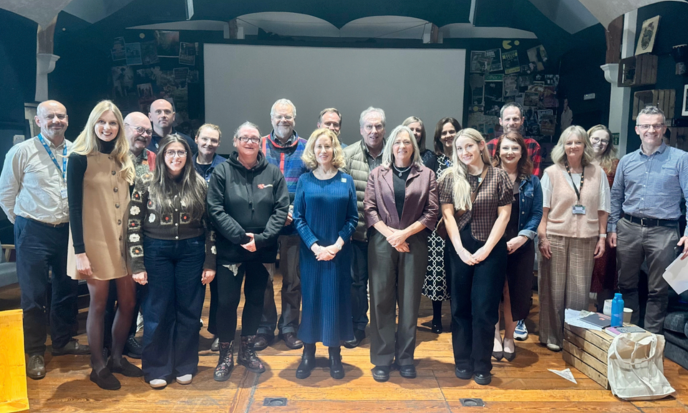
Last week, the Belonging Forum team travelled to Dwyfor Meirionnydd in north Wales for the latest in our series of constituency roundtables, held in partnership with Liz Saville Roberts MP.
As our first constituency visit to Wales, Dwyfor Meirionnydd stood out for its strong levels of belonging. The constituency ranked fifth highest in the UK for overall belonging in the 2025 Belonging Index, while our latest 2026 Belonging Barometer found that 62% of residents feel a strong sense of belonging to their local area and 61% feel strongly connected to their neighbourhood or street.
We wanted to look beyond those figures and hear directly from people living and working in an area where the idea of ‘perthyn’, belonging, carries such weight. We wanted to understand what helps sustain that sense of belonging, the role of the Welsh language in shaping a shared sense of identity and place, and where pressures remain.
Prior to the roundtable, the Belonging Forum visited the Ffestiniog Railway and Y Dref Werdd in Blaenau Ffestiniog. At the railway, the team heard more about its links to the area’s industrial slate heritage, its role in connecting local communities and the importance of volunteers in keeping the local history alive.
At Y Dref Werdd, we discussed the practical support available to local people, including help with food, energy, and other day-to-day pressures, as well as the organisation’s wider environmental and community work across the area.
The roundtable
After these visits, around 25 local residents then joined us at CellB, representing schools, local housing providers, social enterprises, community organisations, local government and Welsh-language groups across the area. We came together to discuss what is helping to foster belonging in Dwyfor Meirionnydd.
The discussion took place in Welsh and English, with simultaneous interpretation available, and attendees were welcome to speak in whichever language they felt most comfortable in.
The Welsh language was a key theme throughout the conversation, described as a central part of everyday life, present in schools, workplaces, relationships, and in the way local organisations work together.
For Liz, part of the value of the roundtable was creating space to look at the area from the outside and ask what should be protected and strengthened.
This includes how to maintain a strong sense of belonging across communities where some people speak Welsh fluently, some are learning, and others do not speak it at all, while continuing to use Welsh confidently in everyday life.
We also heard about organisations that meet regularly and work together through Welsh. In that sense, the language is not simply part of local identity, but part of how people collaborate, share information and support one another.
Creating confidence to use Welsh
Confidence was also a recurring theme, particularly the need for more informal opportunities to learn and use Welsh in everyday settings. Pubs, cafés and other community spaces were named as giving people the chance to practise the language naturally, meet others and become more involved in local life – provided those spaces are accessible and welcoming.
There was also discussion about how Welsh speakers can support new learners by giving them the space and confidence to keep using the language, rather than switching to English. Keeping the conversation in Welsh can help people build confidence and feel more comfortable using the language in everyday life. Roundtable participants pointed out that a key part of confidence building is feeling comfortable to make mistakes!
Schools offered one example of what can happen when people are encouraged to persist. Children arriving at Welsh-medium education without Welsh can become confident speakers within months when those around them continue to use the language consistently with them.
The wider takeaway was that people should not feel their Welsh has to be perfect before they use it – confidence and regular use matter more than getting every single word right.
The practical side of belonging
On the flipside, the conversation also showed how closely belonging is tied to people’s material circumstances.
Low pay, seasonal work and the higher costs that come with rural living all came up. Financial exclusion was closely linked to social exclusion, with people finding it harder to take part in community life when they are struggling to have their basic needs met.
Local organisations and services are often filling gaps left by reduced or withdrawn services. Community hubs, advice services and social enterprises provide practical support, but they also create places where people can meet, ask for help and stay connected.
That local network matters, and organisations spoke about how closely they work together, often through Welsh, sharing information, helping one another and staying connected rather than working in isolation.
Giving young people the option to stay
Young people were another major part of the discussion.
Many want to stay in Dwyfor Meirionnydd, or return after university, but require jobs, housing and a realistic route to building a life locally. People spoke about young residents leaving for Cardiff and other cities because there are more opportunities available elsewhere.
The ambition was not that everyone should stay, but that staying, or coming back, should be a genuine option.
Tourism and community life
Tourism also came up as an important part of the local economy, especially given how much of the constituency sits within Eryri National Park.
Seasonal jobs, low pay and housing demand were all raised. At the same time, people gave examples of sustainable tourism working well when it supports local businesses and gives visitors a stronger connection to the community.
One example was a high-street café that also works as an informal visitor information point, creating more opportunities for visitors and local people to interact. The wider question was about how tourism can support local businesses and community life, rather than putting additional pressure on the places people live.
What stood out most
By the end of the discussion, a few ideas had come through especially clearly: pride in place, respect, strong local relationships and the importance of recognising the people and organisations already doing so much across the area.
There was also a strong sense that Dwyfor Meirionnydd has much to build on. The strength of local organisations, the relationships between people, and the role of Welsh in everyday life all came through repeatedly.
At the end of the roundtable, a number of attendees signed the Belonging Forum’s Global Charter for Belonging, a shared framework and commitment to strengthening belonging through learning, action and collaboration.
It was also clear that attendees valued having a space to come together, share experiences and hear the lived experience of others in the local area, with a real appetite for more opportunities to continue those discussions.
What we heard in Dwyfor Meirionnydd was a picture of belonging shaped by language, place, opportunity and close-knit community, and by people being able to take part in local life and see a positive future for themselves in the place they call home.
We were privileged to facilitate the conversation and to hear local people’s and organisations’ experiences of belonging.
First MP signing of the Global Charter for Belonging
At the end of the roundtable, Liz Saville Roberts MP became the first MP to sign the Belonging Forum’s Global Charter for Belonging, a shared framework and commitment to strengthening belonging through learning, action and collaboration. Liz was joined by other attendees who also committed to uphold the Charter’s principles and use it to guide their journey to build belonging.