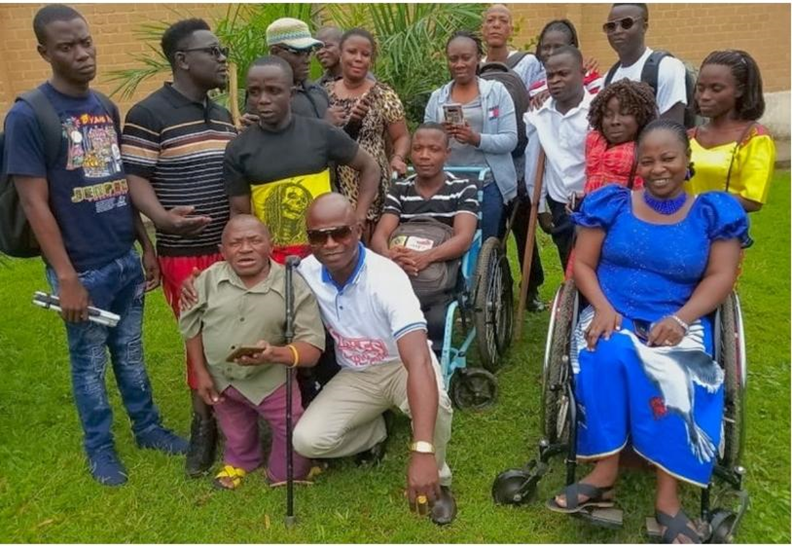
Breaking the Invisible Barriers: Co-Creating True Disability Belonging in Liberia’s Rural Health Care. Leaving No One Behind!
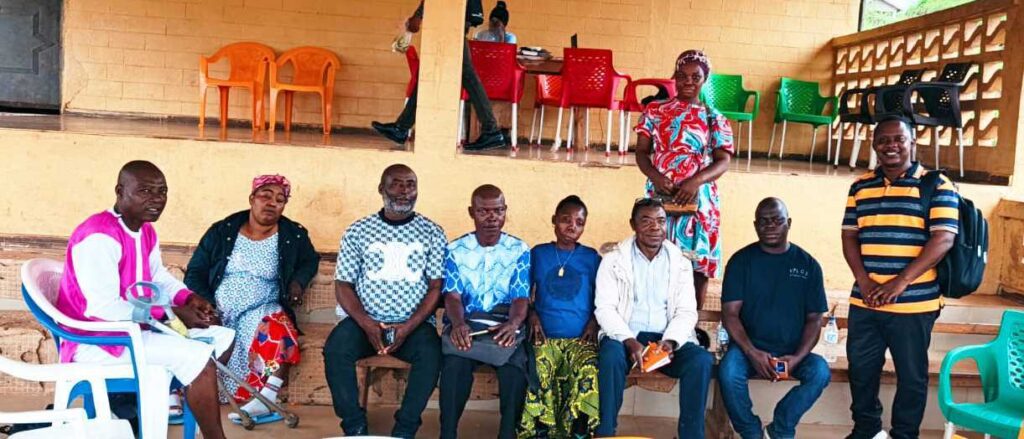
Raymond C. Wah II is a Samuel Fellow in Belonging from Liberia. Raymond is a public health professional and civic leader from Liberia with over a decade of experience at the intersection of community health, civil society, and governance. As a fellow, his focus is global health, conducting research in partnership with Partners in Health.
Comfort, a lady living with disability in Harper, arrives at Joseph Jenkins Hospital after hours of struggling to walk and riding a motorbike to get to her scheduled appointment. Though the ramps are suitable for her condition, the receiving nurse confronts her for coming late in a harsh tune; the nurse explains that because she has come late, she will now not be prioritized despite her severe condition. She is left waiting and feeling discouraged. She later got the nurse’s attention, who was in a hurry and asked her to get her own chart, even though she could barely walk.
This piece examines why physical proximity to a clinic does not, on its own, produce good healthcare for people with disabilities in rural Liberia.
It argues that meaningful change requires shifting from an “access” model, which measures success by ramps, wheelchairs, and travel distance, to a “belonging” model built through co-design with disabled people themselves.
Rural Liberia’s disability-inclusion problem is not primarily a distance problem, it is a design problem.
Liberia’s demographic and household survey, most recently implemented by Liberia’s Institute of Statistics and Geo-Information Service in 2022, established that 534,316 Liberians live with a functional disability — that is, 8.7 percent of the country’s population above the age of five have some difficulty in performing activities, and 2.7 percent of the population have severe disability and cannot perform activities at all in at least one domain. It further states that while 7.9 per cent of urban residents reported some disabilities, 9.6 per cent of the rural population reported living with some disabilities/a lot of disability/cannot perform an activity at all.
Clinics built without the input of people with disabilities are often inadequate, despite efforts to be inclusive. Even after ramps are added, attitudes, lack of staff training, communication barriers, and referral pathways still exclude them by default.
A community-based emancipatory disability research summary report documents that lack of accessibility in public and private buildings — stairs without elevators or ramps, and a shortage of assistive devices for people with hearing, speech, and vision difficulties — remains a major barrier to reaching public offices and services.
The final report of that same research describes how, in the health centres, disabled patients report limited attention from health workers, long waits, unavailable medicines, and costly market alternatives — pushing many toward informal treatment or herbal remedies instead.
The same research found that many women with disabilities described negative experiences around pregnancy and childbirth, driven largely by staff attitudes; some health professionals reportedly felt disabled women should not have children. As a result, many women with disabilities said they preferred to give birth at home rather than at a hospital or clinic. (source)
This piece is witnessed by the voices of unheard people with untold experiences, only for a condition they did not choose:
“As for me, if we come to the hospital let them know that this person is a disable they need to leave the hospital Sonner, this person needs help. Some of us not all the time we have access to everything or we have the strength to go in the record room to find our chart. At least the help they will give us will be sufficient. Let them realize that we are disable, we are not able.”
— Female with disability, PIH-L, GESI
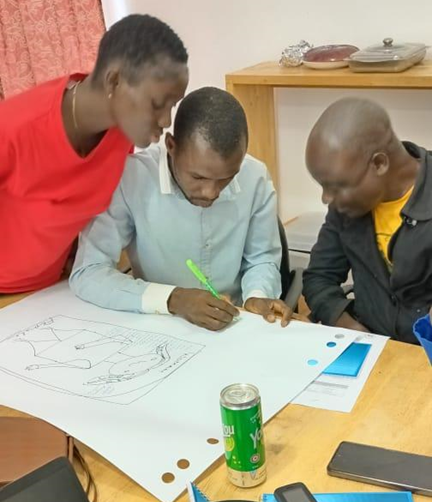
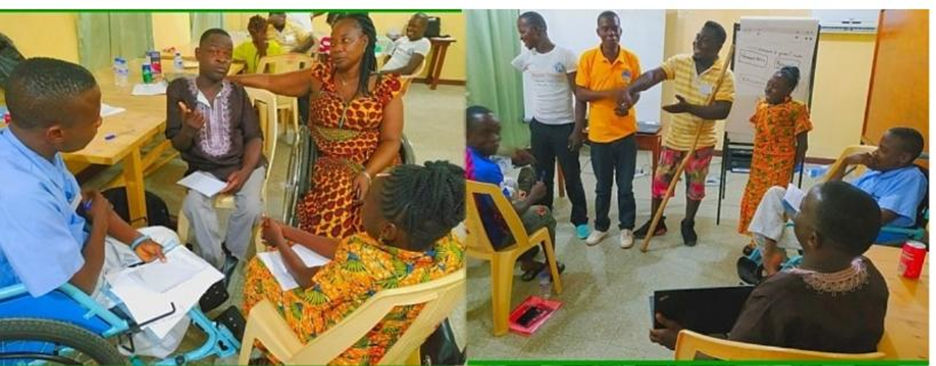
Genuine belonging in healthcare requires disabled Liberians to be co-designers of services, not just end users.
“The authors advocate that co-design is a useful and outcome-generating methodology that proactively enables the inclusion of people with disability and service providers through community-based participatory research and action. Through our experiences, we recommend community-based participatory research, specifically co-design, to generate creative thinking and service design.”
This piece connects to project work on community-based rehabilitation and participatory health design in Liberia, arguing that co-creation with Disabled Persons’ Organizations should be treated as standard practice rather than an add-on.
This reframing matters because it shifts accountability from charity-style “provision” toward power-sharing and dignity, and it offers a replicable model for other under-resourced health systems in the region.
The intended audience of this piece spans global health policymakers and donors who fund infrastructure-first solutions, rural health administrators in Liberia and similar contexts, and disability advocates seeking language and evidence to push for participatory design mandates. It seeks to establish grounds for strong recommendation in co-design implementation.
This piece speaks directly to the program’s core theme of belonging by distinguishing it from mere access: a person can be physically inside a clinic and still be structurally unseen by it.