
The Work of Belonging: Think Tanks and Higher Education in Prison
Yusef Pierce is a Samuel Fellow in Belonging from the United States of America. He is a painter, a MASJ graduate student whose work centres belonging, liberation, and community care, and a research fellow for the Inside-Out Prison Exchange Program.
In 2019, I was an incarcerated student sitting in an Inside-Out think tank meeting when the idea of a Bachelor’s degree pathway first came into view. Two years later, I became the first graduate of the Pitzer College Inside-Out Bachelor’s Degree Pathway.
By 2026, five cohorts had completed the pathway before the program ended at the prison where it began. That pathway did not emerge from access alone; it grew from the shared work, imagination, and governance that Inside-Out think tanks make possible.
I returned for the graduation of the fifth cohort years after my own graduation and release. This was especially meaningful to me because the program was not just something I had merely passed through; it was something I had helped build. The think tank I participated in made me more than a student: it asked me to be a co-creator, collaborator, and contributor. I wanted to witness the results of the shared labor that brought the pathway into being.
That experience taught me that belonging is not simply about being welcomed into a space. Belonging is built when people are trusted to shape the space itself.
That is why think tanks matter: they move incarcerated students from being included in programs to helping govern and shape them.
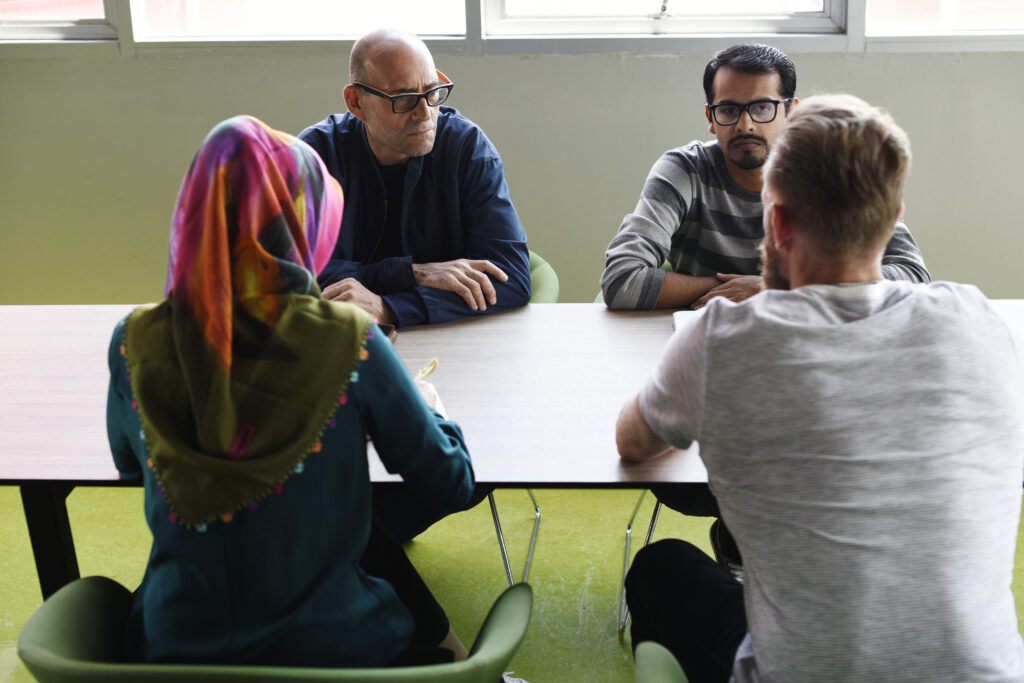
An Inside-Out think tank is a group connected to a local Inside-Out Prison Exchange Program that helps guide and sustain the program over time. These groups may include Inside-Out instructors, incarcerated students, formerly incarcerated alumni, outside students, and community partners.
While each think tank reflects its own prison, college, and community context, the purpose is consistent: to create a regular structure where people closest to the program can assess what is working, identify what must change, plan for the future, and ensure incarcerated students’ voices shape program direction.
Prison higher education is no longer a small or marginal experiment. Since Second Chance Pell began in 2016, college-in-prison programs have expanded across the country and reached tens of thousands of incarcerated students. Prison higher education has moved from the margins of reform into a mainstream conversation about access, rehabilitation, reentry, and institutional responsibility.
As these programs grow, access alone is not enough. The urgent question is not only who is allowed to enter, but who has authority to help design what exists after the door opens. If higher education in prison is serious about inclusion, incarcerated students cannot be treated only as recipients of education. They must be recognized as thinkers, planners, leaders, and partners.
My research begins from that experience. I want to understand how other Inside-Out think tanks create, sustain, or potentially inhibit belonging, and whether they produce the same kind of shared ownership I experienced. When people help create something, they are more likely to take responsibility for it, protect it, and imagine its future.
Inside-Out think tanks should therefore be understood as more than helpful program supports. They offer a governance model for prison higher education more generally. If programs are designed for incarcerated students, incarcerated students should be included as key actors in designing, assessing, and sustaining them. Thus, this is not only a matter of efficiency or feedback, it is a matter of justice.
Think of this as systematic inclusion. If exclusion can be built into systems, then so can inclusion. Think tanks offer one way to embed that practice into the structure of prison education by making participation, decisionmaking, and accountability part of the program itself.
This model should not be limited to Inside-Out. Other prison education programs can build advisory groups, think tanks, or shared governance structures that center incarcerated students and move beyond symbolic inclusion toward meaningful participation. The principle is straightforward: people most affected by a program should have a meaningful role in the decisions that shape it.
Think tanks are powerful because they turn belonging into practice. They show that inclusion is not created by invitation alone, but through shared responsibility, shared authority, and shared ownership.
My hope is that Inside-Out think tanks can offer a framework for what prison higher education can become when lived experience is centered, rather than added as an afterthought. If prison education is going to create belonging, it must do more than open doors. It must share the work of building what comes next. The charge for the field is clear: do not make decisions about people without people.